🚚 Free Worldwide Shipping on All Orders!Shop Now

UMI BUDO 40g (puchipuchi umi budo)
40g per pack
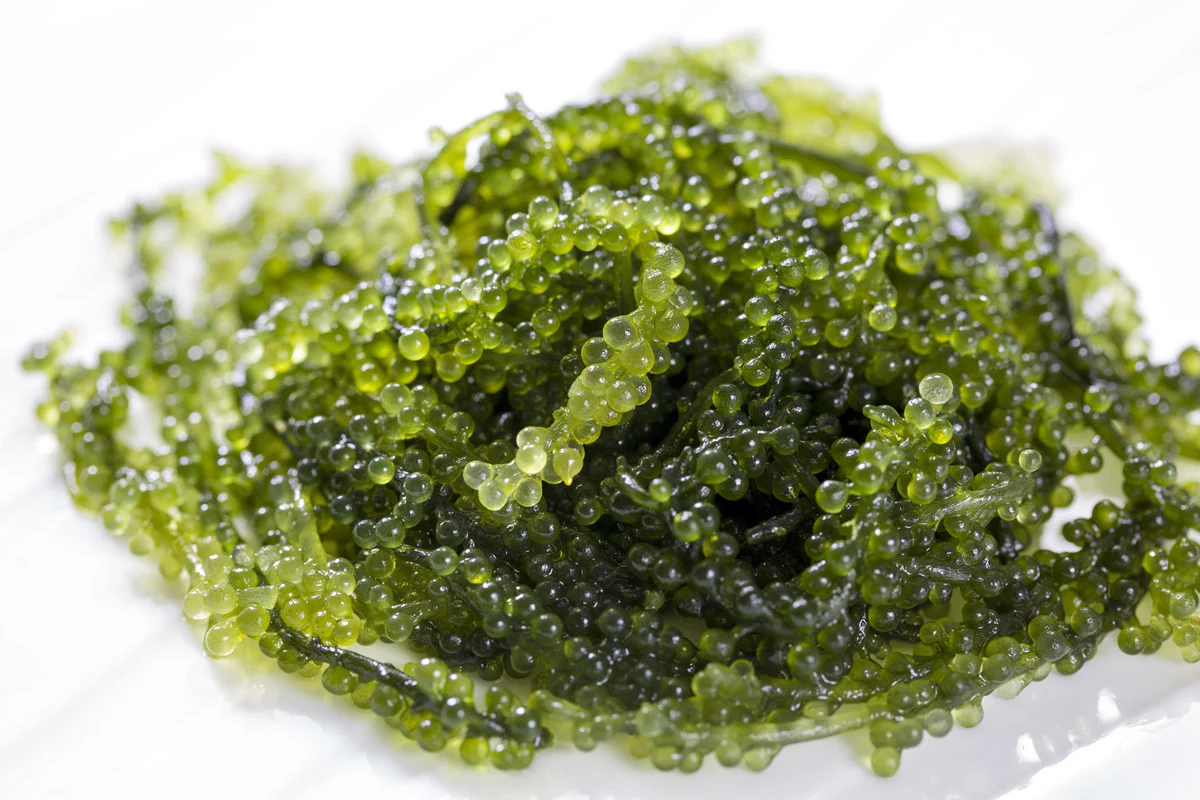
Umi budo is a green seaweed, especially famous and widely cultivated in Okinawa, Japan, where it has become a local specialty and cultural icon.
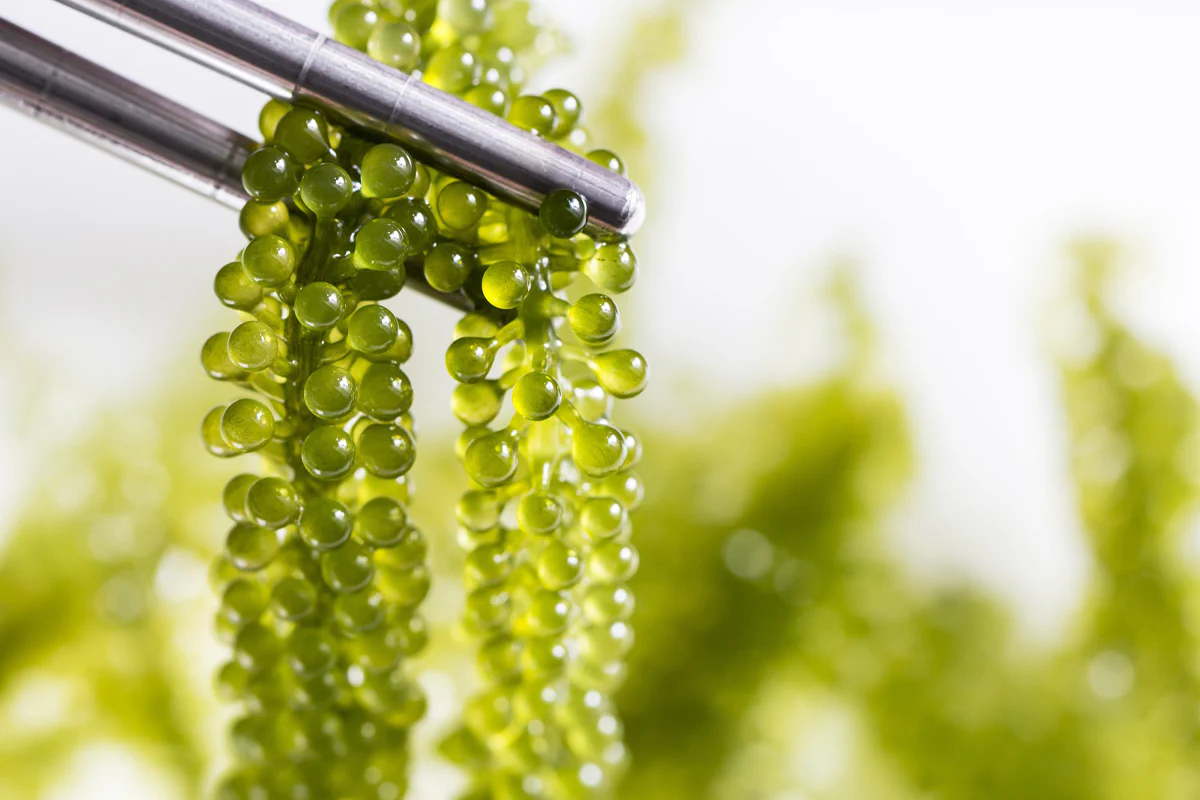
It is commonly called sea grapes or green caviar in English due to its distinctive appearance: delicate strands covered in tiny, translucent green spheres (about 1-2 mm in diameter) that look like miniature bunches of grapes.
• Texture and taste: The little “grapes” burst or pop in your mouth when bitten (often described as “puchi-puchi” in Japanese), releasing a refreshing, mildly salty, briny, umami-rich seawater flavor with subtle herbal notes. It’s crisp, succulent, and juicy.
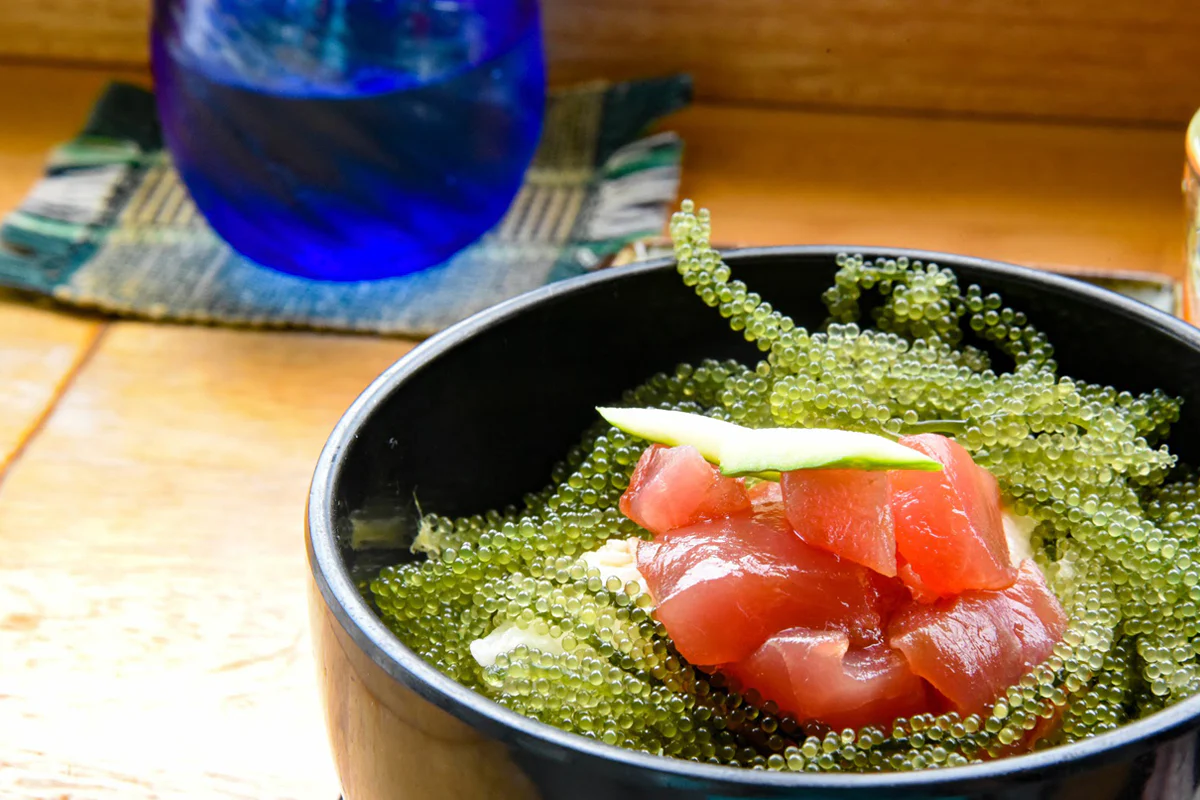
• How it’s eaten: Usually served raw and fresh (never cooked). It’s commonly enjoyed:
◦ As a simple side dish or salad with ponzu sauce (citrus-soy dressing).
◦ In sushi, sashimi platters, or atop rice.
◦ In Okinawan cuisine or as a garnish in various Japanese dishes.
• Nutritional aspects: It’s nutrient-dense, providing minerals, vitamins, dietary fiber (including prebiotic benefits for gut health), and is low in calories—often praised as a healthy, superfood-like delicacy.
*Allergen: SEAWEED(SEA GRAPES), SALT
$2.44
Original: $8.12
-70%UMI BUDO 40g (puchipuchi umi budo)—
$8.12
$2.44Product Information
Product Information
Shipping & Returns
Shipping & Returns
Description
40g per pack
Umi budo is a green seaweed, especially famous and widely cultivated in Okinawa, Japan, where it has become a local specialty and cultural icon.
It is commonly called sea grapes or green caviar in English due to its distinctive appearance: delicate strands covered in tiny, translucent green spheres (about 1-2 mm in diameter) that look like miniature bunches of grapes.
• Texture and taste: The little “grapes” burst or pop in your mouth when bitten (often described as “puchi-puchi” in Japanese), releasing a refreshing, mildly salty, briny, umami-rich seawater flavor with subtle herbal notes. It’s crisp, succulent, and juicy.
• How it’s eaten: Usually served raw and fresh (never cooked). It’s commonly enjoyed:
◦ As a simple side dish or salad with ponzu sauce (citrus-soy dressing).
◦ In sushi, sashimi platters, or atop rice.
◦ In Okinawan cuisine or as a garnish in various Japanese dishes.
• Nutritional aspects: It’s nutrient-dense, providing minerals, vitamins, dietary fiber (including prebiotic benefits for gut health), and is low in calories—often praised as a healthy, superfood-like delicacy.
*Allergen: SEAWEED(SEA GRAPES), SALT